October 17, 2026
Walking across your property on a crisp morning provides a tremendous sense of pride, with mature trees framing your yard and offering valuable shade over your living space. However, as trees age or suffer damage from severe weather, those same towering landscape features can quietly transform from prized assets into major safety risks.
High wind events, ice accumulation, summer heatwaves, and hidden pest infestations gradually break down a tree's structural stability from the inside out. Ignoring subtle warning signs of decay allows structural weakness to spread unchecked until a multi-ton trunk or heavy canopy branch falls without warning onto your roof, driveway, or power lines. Partnering with a skilled crew for necessary tree removals ensures that compromised timber is cleared before high winds test its load-bearing capacity.
Taking a proactive stance on landscape safety preserves your household capital and keeps your living environment safe through every season. Recognizing early indicators of structural failure gives you the opportunity to address hazardous trees on your own terms rather than dealing with catastrophic storm damage in the middle of the night.
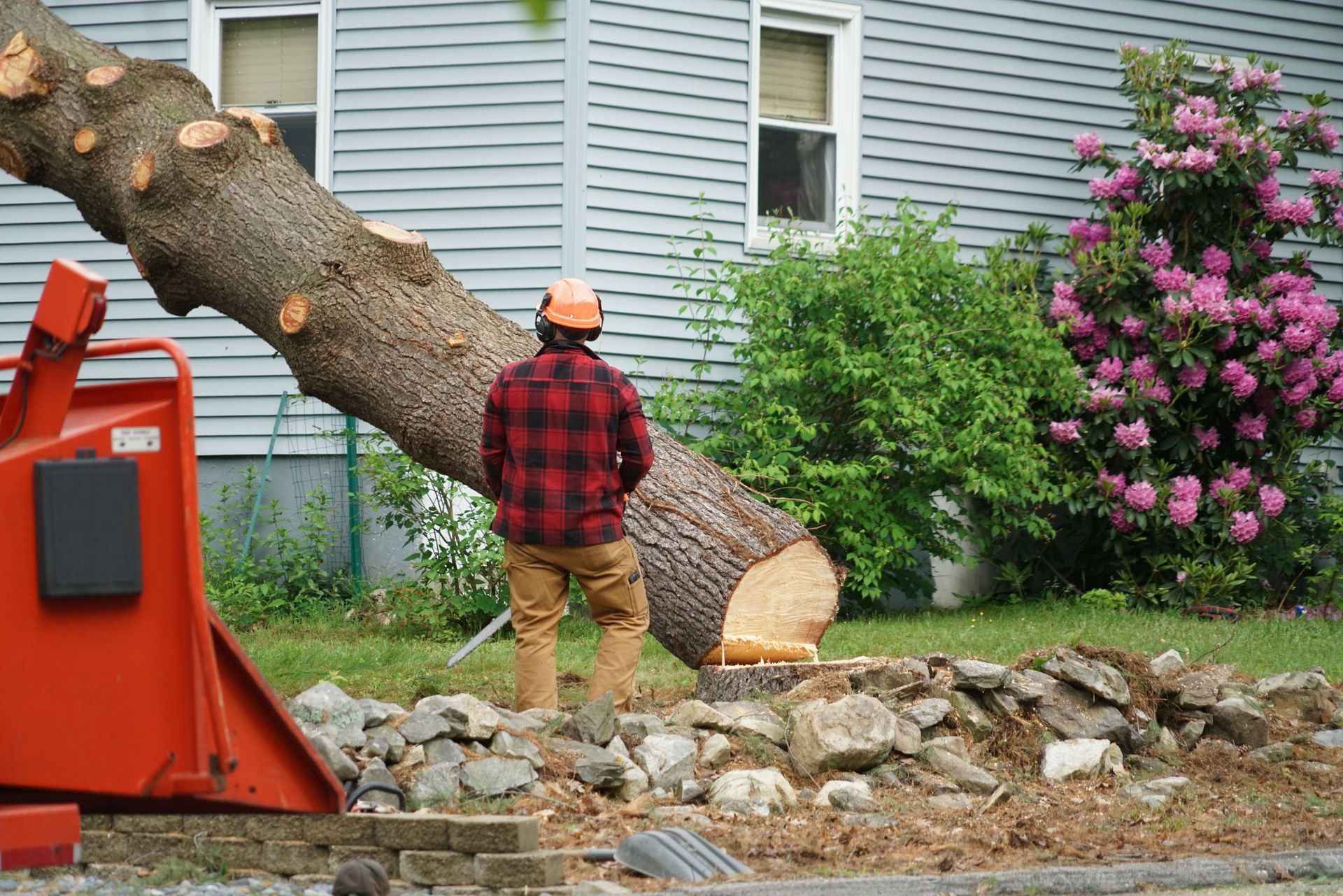
Professional arborist teams utilize heavy-duty cranes, bucket trucks, and controlled rigging systems to dismantle hazardous trees safely in tight residential spaces. According to Today’s Homeowner, a tree needs to be removed when more than 50% of its structure is damaged or decayed. Scheduling timely assessments eliminates dangerous liabilities, protects nearby building envelopes, and provides complete peace of mind. Learning to spot the primary warning signs of structural failure highlights why planning timely tree removals is essential for maintaining property safety.
1. Trunk Cracks and Split Seams
Examining the main trunk of a mature tree often reveals critical clues about its internal structural health long before the leaves show signs of distress. Deep vertical fissures that penetrate deep into the inner heartwood indicate that the trunk is actively splitting under the immense weight of its overhead canopy. When bark seams pull apart and expose raw internal wood, the tree loses the physical strength required to withstand heavy wind gusts or ice loads.
Scheduling professional tree removals becomes essential when deep structural cracks extend through main trunk unions or severe split seams threaten structural integrity. Experienced arborists evaluate whether internal decay has progressed too far for bracing or cabling techniques to stabilize the tree safely. Removing severely split trees prevents sudden trunk failure during severe weather, protecting your lawn, vehicles, and home from destructive impacts.
2. Massive Cavities and Internal Trunk Rot
Inspecting large hollows or pockets of decayed wood along the lower trunk highlights significant structural vulnerabilities beneath the bark. While a small hollow cavity might not immediately threaten a tree, expanding decay that destroys the inner heartwood leaves only a thin outer shell of living sapwood to support the entire canopy. When fungal rot eats away the solid wood core, the tree can no longer support its own weight during heavy storms.
Relying on established crews for complex tree removals ensures that hollow, structurally hollow trees are safely taken down piece by piece. Certified arborists measure sound wood thickness around trunk cavities to determine if the tree poses an immediate fall hazard to nearby structures. Taking down severely decayed trees before they collapse eliminates major safety hazards and keeps your outdoor space secure.
3. Fungal Mushrooms Sprouting Around Base and Roots
Checking the ground line and root flare surrounding your trees provides crucial insights into underground root health and soil anchoring capability. Clusters of shelf mushrooms, conks, or soft fungal growths sprouting directly from main anchor roots or the lower trunk signal active fungal rot inside the root structure. When anchor roots decay underground, the entire tree loses its physical grip on the surrounding soil, making whole-tree failure inevitable during saturated soil conditions.
Booking necessary tree removals stops fungal root decay from turning into a sudden, unexpected uprooting event during severe weather. Qualified tree specialists inspect root flares for soft, crumbling wood and evaluate whether root loss has compromised overall stability beyond recovery. Removing trees with compromised root systems protects your home from catastrophic fall damage and keeps your outdoor living area safe.
4. Sudden Leans and Root Plate Lifting
Noticing a sudden or dramatic shift in a tree's vertical angle is one of the most urgent warning signs a property owner can face. While many trees naturally grow at slight angles toward available sunlight, a newly developing lean accompanied by cracked, mounded, or lifted soil on the opposite side indicates active root failure. When anchor roots snap underground, the tree is actively in the process of uprooting and falling over.
Enlisting a dedicated team for urgent tree removals provides immediate professional intervention to secure or safely remove top-heavy, leaning hazards. Skilled crews use specialized crane equipment and bucket trucks to take down leaning trees safely without damaging nearby lawn areas or buildings. Relying on an established contractor secures your landscape, eliminating the terrifying risk of a massive tree crashing onto your home during high winds.
5. Widespread Canopy Dieback and Dead Branches
Looking up at the upper canopy reveals vital information regarding the tree's overall vitality and ability to distribute nutrients. When more than half of the upper branches remain bare during the growing season, drop leaves prematurely, or show extensive deadwood, the tree is entering its final stages of decline. Dead canopy limbs lose their natural flexibility, becoming brittle and prone to snapping off during moderate windstorms. Executing planned tree removals clears dead, dying trees before brittle canopy branches break off and damage surrounding property.
6. Encroachment on Home Structures and Foundations
Evaluating how mature trees interact with nearby residential structures is critical for long-term property protection. When massive trunks grow within feet of foundation walls, expanding root systems exert pressure against buried concrete blocks, exploiting hairline cracks and creating pathways for basement water leaks. Additionally, overgrown canopies hanging directly over roof lines drop heavy debris, block drainage gutters, and scrape away protective shingle granules during windy days. Planning strategic tree removals eliminates structural friction between growing trees and nearby residential envelopes.
7. Evaluating Pest Infestations and Structural Hollows
Investigating wood-boring insect activity, such as emerald ash borer or carpenter ant colonies, reveals severe internal structural damage hidden beneath the bark. Wood-boring insects create extensive networks of tunnels throughout the trunk and major branches, disrupting nutrient flow and weakening the wood's density. As insect damage spreads, the tree becomes increasingly brittle, making it highly susceptible to sudden structural failure. Contracting specialists for targeted tree removals prevents insect-damaged timber from posing dangerous hazards to your family and neighboring properties.
Protecting your property, family, and home from severe environmental hazards requires taking a proactive approach to evaluating the mature trees across your landscape. Tall trees add incredible aesthetic beauty and natural character to your yard, but ignoring deep trunk cracks, hollow cavities, fungal root rot, sudden leans, or widespread canopy dieback will only lead to catastrophic property destruction, emergency utility outages, and expensive insurance claims down the road.
By taking immediate control of your landscape safety goals today and trusting your property to dedicated trade specialists, you successfully safeguard your hard-earned financial investment and keep your outdoor space secure for decades to come. If you notice severe trunk splits, fungal growth, or sudden leaning among your mature trees, visit Nadeau Tree Service online today to schedule your complete property evaluation and secure elite tree removals!